

What you agree with each other, and what you still owe the lender. They are not the same thing.
The debt that outlives the relationship
Most separating couples work through the house and the children first, and arrive at the debts last, by which point the debts have been accruing for months. A joint loan taken out for a kitchen. An overdraft that quietly became permanent. A credit card in one name that paid for family holidays, school shoes and a boiler repair. A car on finance that only one of you has driven since March.
None of it ends when the relationship does. The lenders took no part in the separation. They were never told about it, and nothing the two of you decide binds them. That is the gap this article is about: the difference between what you agree with each other and what you owe the people you borrowed from.
Joint and several liability, stated plainly
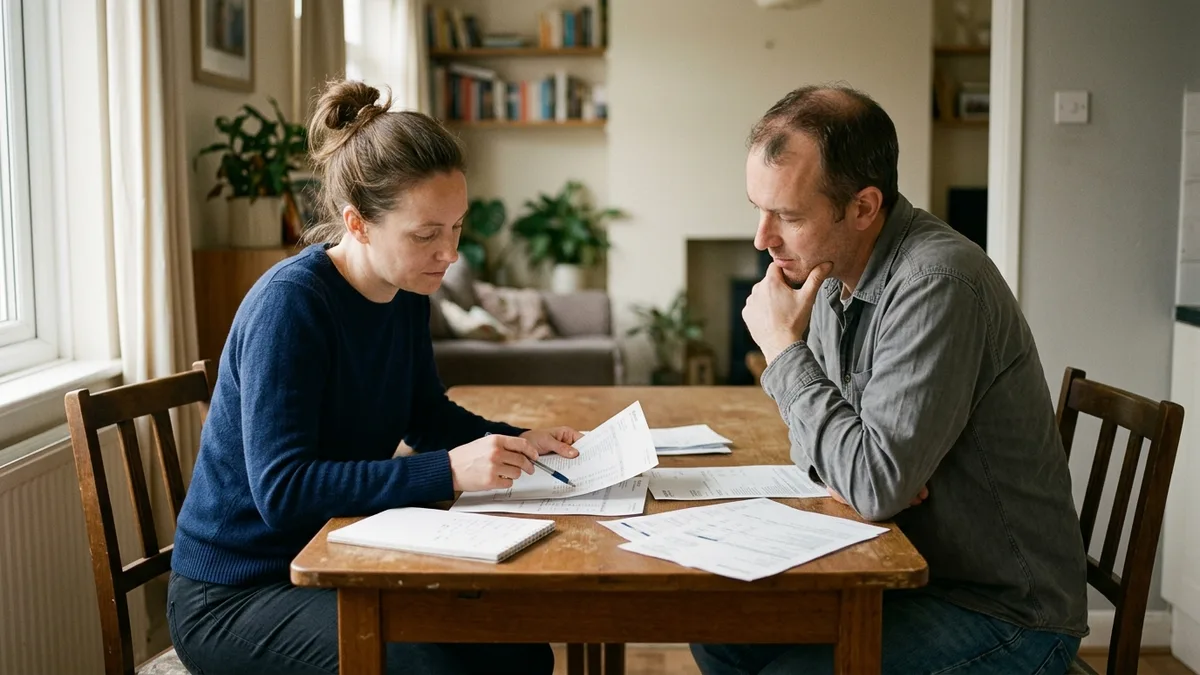
A joint debt makes each of you liable for the whole of it. Not half of it. This is what "joint and several" means, and it is the single most misunderstood fact in this area of a separation.
The practical consequence is blunt. If one of you stops paying, the lender pursues whichever of you it can reach, and it will reach for the one who answers the phone. It has no interest in who moved out, what was agreed at the kitchen table, or what a court might later decide between you. A missed payment lands on both credit files. People who moved out a year earlier, believing they had walked away clean, routinely discover this when they apply for a mortgage of their own and find an arrears marker they did not know existed.
An agreement between you is enforceable between you. It is invisible to the lender. Both statements are true at the same time, and holding both in mind is what makes the rest of this manageable.
Take an inventory before you negotiate
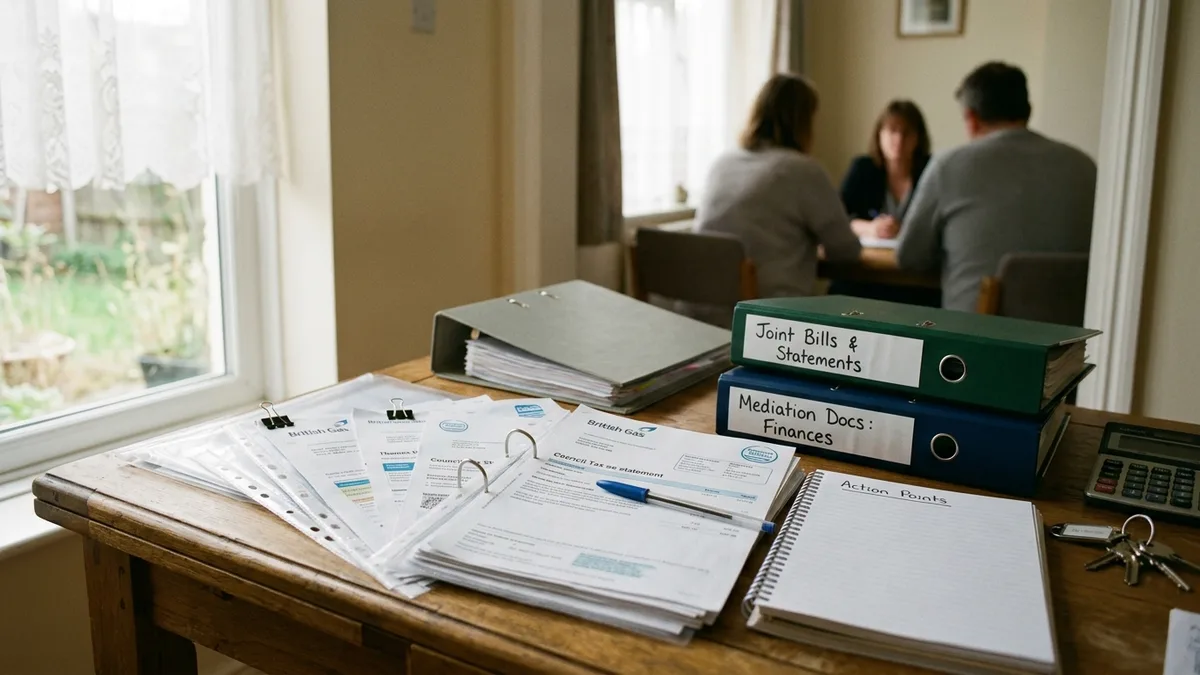
You cannot divide what you have not listed. Before mediation is useful, both of you need the same picture, and in practice that means each of you obtaining your own statutory credit report and putting everything side by side.
For each debt, write down four things: whose name is on it, the current balance, the monthly payment, and what the borrowing actually paid. That last column is the one people skip, and it is the one that decides most arguments. A loan taken in one name that refinanced a joint overdraft is a joint debt in substance whatever the paperwork says, and a couple looking at the same list usually reaches that conclusion without help.
Expect surprises. A card someone forgot about, a buy-now-pay-later balance, an old catalogue account. Bringing them out early is uncomfortable and cheaper than discovering them halfway through.
What mediation can actually settle

Mediation settles the questions between you: who pays which debt, from when, for how long, and what happens if circumstances change. It can record that one of you takes the car finance and the other takes the loan. It can set a date by which a joint account is closed. It can agree that a lump sum from the sale of a house clears a specific balance before anything else is divided.
What mediation cannot do is rewrite a credit agreement. Only the lender can release someone from a joint debt, and it will do so only by agreeing to transfer the borrowing into one name, which means a fresh affordability assessment on one income. Sometimes it agrees. Often it does not, and the honest answer is to plan for both outcomes rather than assume the first.
Where a debt cannot be transferred, the usual arrangement is an indemnity: one of you takes responsibility for paying it, and undertakes to compensate the other if they end up having to pay it instead. It is not as strong as a release. It is considerably stronger than nothing, and where the balance is small it is often the sensible answer.
Priority debts come first
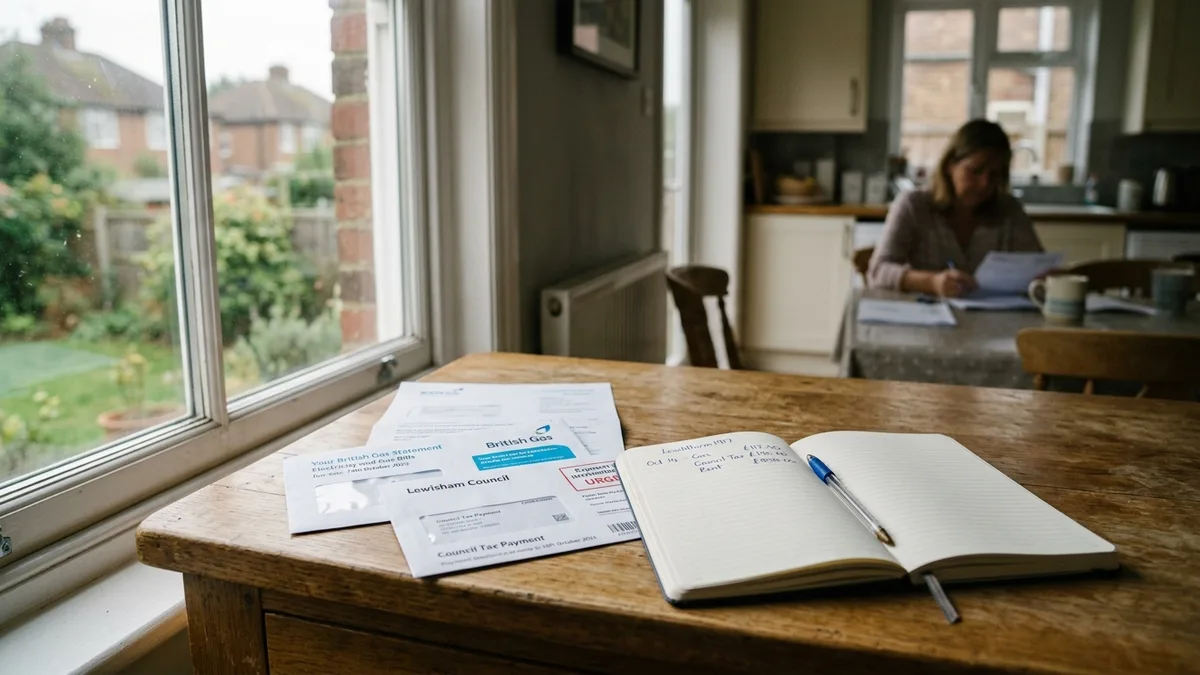
Not all debt is equal, and the order matters more than the arithmetic. Rent and mortgage arrears, council tax, energy, and anything secured on the home carry consequences the others do not: your home, a court summons, a bailiff. Credit cards and personal loans are painful and rank behind them.
If money is tight, priority debts are paid first and the rest are negotiated with what remains. A separation agreement that services a personal loan while council tax arrears build is one that will unravel, and mediators see that pattern often enough to raise it before anyone else does.
Talk to the lenders early
Lenders are markedly more helpful before a payment is missed than after. Most have a team for exactly this, and a temporary reduced payment, a payment holiday or a longer term are all normal requests that are easier to arrange while the account is up to date.
Tell them you have separated. It is not an admission of anything and it puts a note on the file that explains what follows. If the debts are beyond what either of you can service, free regulated debt advice is available nationally from StepChange, National Debtline and Citizens Advice, and taking it does not affect your position in mediation. Mediators routinely suggest running both conversations in parallel rather than in sequence.
Recording it so it holds
The outcome of mediation is written up as a memorandum of understanding: what you agreed, in plain terms, dated and held by both of you. On its own it is not a court order.
Where the separation also involves a divorce, the debt arrangement usually belongs inside the financial consent order alongside the property and pensions, because a consent order is the instrument a court can enforce. Your solicitor draws that up from the memorandum, which is a great deal cheaper than instructing one to negotiate the terms from scratch. For couples who are not divorcing, a separation agreement drafted from the same document does similar work.
Whichever route, put a review point in it. Debts change, incomes change, and an arrangement with no mechanism for revisiting itself becomes a source of the next argument.
Debts in one name that the family lived on
Legally, the person named on the account owes the money. In a financial settlement the question is broader: what did the borrowing pay for, and who benefited.
A credit card in one name that covered the weekly shop for two years is not the cardholder's private spending, and treating it that way produces a settlement that is obviously unfair to one person and will be resisted. Equally, a card that funded one person's spending alone is not converted into a shared liability by the fact that the couple were together at the time.
The evidence usually settles it without argument. Twelve months of statements shows a supermarket-and-utilities pattern or it shows something else. Where the picture is genuinely mixed, couples commonly agree a split proportionate to what the statements show rather than trying to allocate every transaction, and mediators will suggest that long before either side has spent money arguing about it.
Business borrowing and self-employment
A personal guarantee on a business loan is one of the more serious things a separating couple can be carrying, and it is often the thing neither of them has thought about. If one of you signed a guarantee for the other's company, that exposure survives the separation and can survive the company.
Directors' loan accounts, business overdrafts secured on the family home and vehicles held through a business all need identifying early, because their treatment depends on facts a mediator will need before the discussion is useful: whether the guarantee is joint, what it is capped at, and whether the lender would release it.
This is one of the situations where mediation works best alongside professional advice rather than instead of it. The mediator manages the conversation and keeps both of you working from the same figures; an accountant tells you what those figures mean, and a solicitor tells you what a release would take.
When one of you cannot pay at all
Sometimes the honest position is that the debts exceed what either household can service, and no allocation between you changes that. Pretending otherwise produces an agreement that fails in its first quarter.
Debt relief options exist for exactly this: a debt management plan, an individual voluntary arrangement, a debt relief order or bankruptcy, each with different thresholds and different consequences. They interact with a financial settlement in ways worth understanding before either of you commits. Bankruptcy in particular vests assets in a trustee, which can cut across property arrangements a couple has just agreed.
Free, regulated advice is the right starting point, and it is genuinely free: StepChange, National Debtline and Citizens Advice all provide it without charge. Take it before finalising the financial arrangements, not after. Where one of you is heading towards a formal debt solution, mediation is still useful, because the agreement can be built around what that solution actually permits.
If you cannot agree
Where mediation does not produce an agreement, liabilities are dealt with by the court as part of the overall financial remedy. The court looks at the whole picture: resources, needs, the length of the relationship, and the position of any children. Debts are part of that assessment rather than a separate exercise in apportionment.
Two things are worth knowing before going down that road. The first is that the court's discretion is broad, so the outcome is less predictable than a negotiated one. The second is that a MIAM is a requirement before most financial applications, which means the mediation conversation happens either way; the only question is whether it happens before or after the costs start.
What to bring to the first meeting
The single thing that makes the first session productive is an accurate list. Bring your statutory credit report, twelve months of statements for any account in dispute, the current balance and monthly payment for every debt, and the paperwork for anything secured: a car on finance, a second charge on the house, a guarantee.
You do not need it perfect and you do not need to agree on any of it yet. You need the same document in front of both of you, because almost every debt argument in a separation turns out, on inspection, to be two people working from different numbers.
Getting started
Debt is the part of a separation that rewards being dealt with early and punishes being left. If you are somewhere in the middle of it, the first step is a MIAM, the individual meeting where a mediator explains how the process works and whether it fits your circumstances.
Bring the list. Bring the credit reports if you have them. A first conversation that starts from an accurate inventory covers more ground than three that start from memory.
How Mediation Direct can help in United Kingdom
Who pays what, from when, and what happens if they stop. Written down and enforceable.
Frequently Asked Questions About Our Services
We agreed my ex would pay the loan. Why is the lender chasing me?
Because the lender is not a party to your agreement. A joint debt makes each of you liable for the whole balance, so the lender can pursue either of you for all of it. Your agreement is enforceable against your ex, not against the lender's right to ask you.
Can mediation remove my name from a joint debt?
No. Only the lender can do that, by agreeing to transfer the borrowing into one name after a fresh affordability assessment. Mediation settles who pays what between you, and records an indemnity where a transfer is not possible.
What is an indemnity, and is it worth having?
It is an undertaking that if you end up paying a debt the other person agreed to cover, they compensate you. It does not stop the lender coming to you, and it does give you a clear claim against them. Where a balance is small or a transfer has been refused, it is usually the practical answer.
Which debts should we deal with first?
Priority debts: mortgage or rent arrears, council tax, energy, and anything secured on the home. They carry consequences the others do not. Credit cards and personal loans are negotiated with what is left after those are covered.
Does a debt taken in one name count as joint?
Legally the account holder owes it. In a financial settlement what the borrowing paid for matters too, so a loan in one name that cleared a joint overdraft or funded the family is usually treated as a shared liability even though only one name appears on it.
We are not divorcing. Can we still write the agreement down?
Yes. The memorandum from mediation can be drafted into a separation agreement, which records the same terms. It is not a consent order and it is clear evidence of what was agreed, which is what a court would want to see later.
About the author

Authored and reviewed by Family Mediation Council (FMC) accredited family mediators. Every procedural timeline and statutory requirement is verified against the Family Procedure Rules 2010 Part 3 and current Ministry of Justice standards.
- FMC Accredited
- Standards Board Registered
- Authorised MIAM Provider
- MoJ Voucher Scheme
Talk it through with someone
No obligation, and nothing is decided on the call. We will talk through where you are and what your options actually are.